The Five-Gaited Horse: Riding Iceland's Tölt Across the Highlands
 Cindi Sanden
Some rides in this series are special because of where they take you. The Icelandic horse is special because of how it moves. This is the horse with the extra gear, the one that can carry you across a lava field so smoothly you could hold a full cup of coffee, and riding it through the Icelandic highlands is one of the most singular things you can do in a saddle anywhere.
Here is why it is special, and what a trip actually looks like.
The horse with two extra gaits
Almost every horse in the world has three gaits: walk, trot, and canter or gallop. The Icelandic has five. On top of the usual three, it adds the tölt and the flying pace.
The tölt is the famous one. It is a smooth four-beat gait with no bounce to it at all, because the horse always keeps a foot on the ground and never has that jarring moment of suspension you feel at the trot. The result is a gliding, level ride, and riders love to show it off by holding a full glass and not spilling a drop. You can tölt gently or you can really move, and either way you float.
The fifth gait, the flying pace or skeið, is the sports car. It is a fast, two-beat gait used for short flat-out sprints, and a good pacer reaches real speed. Not every Icelandic horse has it. The ones that do are called five-gaiters and the ones that stick to four are four-gaiters, and both are prized. Either way, the tölt is the gait you will fall in love with.
The purest horse in the world
The Icelandic horse has been sealed off from the rest of the horse world for over a thousand years. Back in the year 982, Iceland's parliament banned the import of any other horses, and that law has held ever since, which makes this one of the purest and oldest breeds on the planet. It has been shaped entirely by Iceland: small, immensely tough, and unbothered by weather that would send most horses running for the barn.
There is one poignant rule that comes with all of this. A horse may leave Iceland, but it can never come back. To protect a population with no immunity to outside disease, once an Icelandic horse is exported it is gone for good. The horses you ride there have never known anywhere else, and never will.
And do not call it a pony, by the way. It is pony-sized, but Icelanders will gently correct you every time. It is a horse.
The riding: highlands, lava fields, and rivers of horses
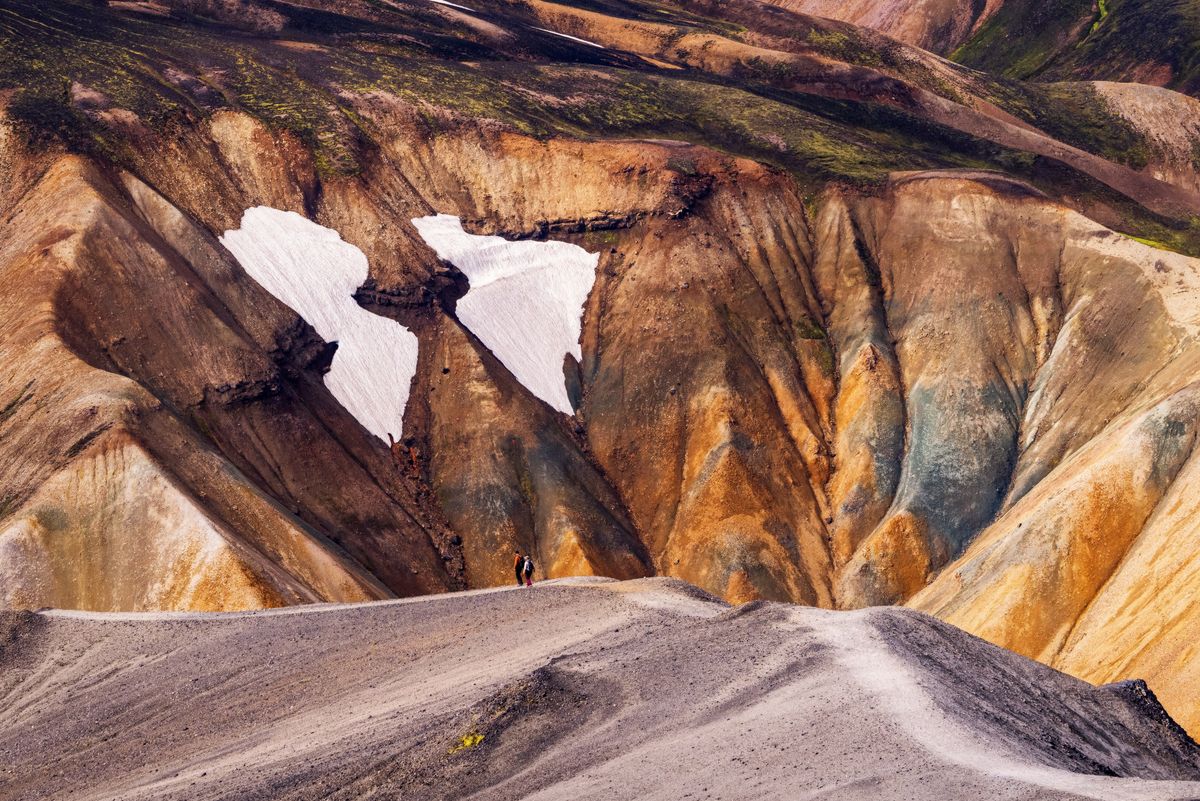
The classic trip is a summer highland trek. You ride through country that does not look quite real, the multicoloured rhyolite mountains around Landmannalaugar streaked in red and yellow and green, black lava fields, glacial rivers, and steam drifting up out of the ground. Many of these trips move a whole loose band of free-running horses along with you, so you change onto a fresh mount partway through the day and ride in the middle of a flowing herd, which is a very Icelandic way to travel.
If you come in the autumn, there is something even better: the round-up. Every year the horses that have run free in the highlands all summer are gathered and driven back down to the farms before winter, and a handful of farms let riders join in. You spend days in the saddle helping push the herd down through the moors, then sort them at the corral and celebrate with the farmers afterward. It is a real working tradition, not a show put on for visitors, and it stays with you.
Who this is really for
This one has a version for everyone. Short day rides out of the riding centres near Reykjavik welcome complete beginners, and there is no better place to feel the tölt for the first time. The multi-day highland treks and the autumn round-ups are a different animal, long days in changeable weather over rough country, and those reward riders who already have some real experience and a good level of fitness.
Season for the highland trips is roughly June through September, when the interior is open and green. The horse round-ups come at the very end of the season, late September into October.
How we book it
Iceland has a handful of excellent specialist riding operators, and the right trip depends entirely on how experienced you are and whether you want a gentle first taste of the tölt or a full week driving horses through the highlands. That part is mine to sort out. Tell me how much you have ridden, when you can travel, and whether the round-up is calling to you, and I will match you to the right one.
If the horse with the extra gear has your name on it, email me or send me a DM and let's get you to Iceland. And if you want to see how Iceland compares to the rest, the full series recap sorts every ride by skill level and dream.
Talk soon, Cindi